




What is the noise level of an energy recovery ventilator?
 Sep 15, 2026|
 What is the noise level of an energy recovery ventilator?
As a trusted supplier of energy recovery ventilators (ERVs), I often encounter inquiries regarding the noise levels of these essential ventilation devices. Understanding the noise level of an ERV is crucial for both residential and commercial applications, as it directly impacts the comfort and well - being of building occupants. In this blog, I'll delve into the factors influencing the noise level of an ERV, how to measure it, and what to expect in different scenarios.
Factors Affecting the Noise Level of an ERV
-
Fan Design and Speed
The fans in an ERV are one of the primary sources of noise. The design of the fan blades, their size, and the speed at which they operate all play a significant role. High - speed fans generally produce more noise than low - speed ones. Modern ERVs often come with variable - speed fans, which allow users to adjust the airflow and, consequently, the noise level according to their needs. For example, during the night when noise sensitivity is higher, users can set the fan to a lower speed to reduce the noise. -
Motor Quality
The motor that drives the fans is another critical factor. A high - quality motor is designed to operate smoothly and quietly. Cheaper motors may produce more vibrations and noise, which can be transmitted throughout the unit and into the surrounding environment. As a supplier, we always ensure that our ERVs are equipped with top - of - the - line motors to minimize noise. -
Ductwork and Installation
The ductwork used in an ERV system can also contribute to noise. Improperly sized or installed ducts can cause air turbulence, which results in increased noise. Leaky ducts can also allow air to escape, creating additional noise. It's essential to have a professional install the ERV and ductwork to ensure proper sizing and tight connections. For instance, if the ducts are too narrow, the air will flow at a higher velocity, generating more noise. -
Insulation
The level of insulation in the ERV unit itself and the surrounding area can have a significant impact on noise reduction. Well - insulated units can absorb and dampen the noise generated by the fans and motors. Additionally, insulating the ductwork can help reduce the transmission of noise from the ERV to the living or working spaces.
Measuring the Noise Level of an ERV
The noise level of an ERV is typically measured in decibels (dB). A decibel is a logarithmic unit that measures the intensity of sound. In general, a quiet residential environment has a background noise level of around 30 - 40 dB, while normal conversation is about 60 dB.

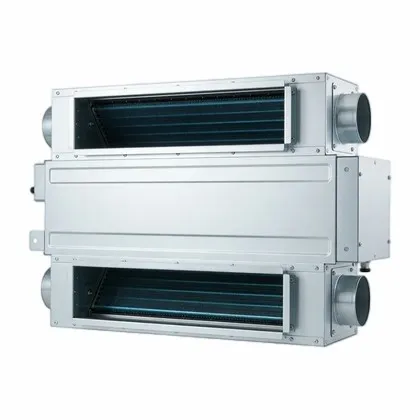
Most ERV manufacturers provide the noise level specifications for their products. These specifications usually indicate the noise level at different fan speeds. For example, an ERV might have a noise level of 35 dB at low speed and 50 dB at high speed. When choosing an ERV, it's important to consider these specifications and select a unit that meets your noise requirements.
Noise Levels in Different Applications
-
Residential Applications
In a residential setting, noise is a major concern. Homeowners want a quiet and comfortable living environment. For bedrooms and living rooms, an ERV with a noise level of around 30 - 40 dB at low speed is ideal. This ensures that the unit operates quietly without disturbing the occupants. Our Domestic Heat Recovery Ventilation Units are designed to meet these requirements, providing efficient ventilation with minimal noise. -
Commercial Applications
Commercial buildings, such as offices, restaurants, and retail stores, also require proper ventilation. However, the noise tolerance in commercial settings may be higher than in residential ones. In an office environment, an ERV with a noise level of 40 - 50 dB at normal operation may be acceptable. Our Commercial Erv System is engineered to provide effective ventilation while keeping the noise level within an acceptable range for commercial spaces. -
Industrial Applications
Industrial settings often have higher noise levels due to the nature of the operations. However, even in industrial environments, it's important to keep the noise from the ERV under control. Our Industrial Air Filtration and Ventilation solutions are designed to handle the high - volume airflows required in industrial applications while minimizing noise.
Tips for Reducing ERV Noise
-
Proper Sizing
Ensure that the ERV is properly sized for the space it is intended to serve. An oversized or undersized unit can lead to increased noise levels. A professional HVAC contractor can perform a load calculation to determine the appropriate size of the ERV. -
Regular Maintenance
Regular maintenance of the ERV is essential to keep it operating quietly. This includes cleaning the filters, lubricating the motors, and checking for any loose parts. A well - maintained unit will operate more efficiently and produce less noise. -
Isolation Mounts
Using isolation mounts can help reduce the transmission of vibrations from the ERV to the surrounding structure. These mounts absorb the vibrations and prevent them from being transferred as noise. -
Ductwork Design
Proper ductwork design can significantly reduce noise. Use smooth - walled ducts, avoid sharp bends, and ensure proper sealing to minimize air turbulence and noise.
Conclusion
The noise level of an energy recovery ventilator is an important consideration for both residential and commercial applications. By understanding the factors that affect noise, measuring the noise level, and taking steps to reduce it, you can ensure a quiet and comfortable environment. As a supplier of high - quality ERVs, we are committed to providing products that offer efficient ventilation with minimal noise. If you are interested in learning more about our energy recovery ventilators or have specific noise requirements for your project, we encourage you to [contact us for a purchase discussion]. Our team of experts is ready to assist you in finding the perfect ERV solution for your needs.
References
ASHRAE Handbook - HVAC Systems and Equipment. American Society of Heating, Refrigerating and Air - Conditioning Engineers.
Manufacturer's specifications for energy recovery ventilators.